

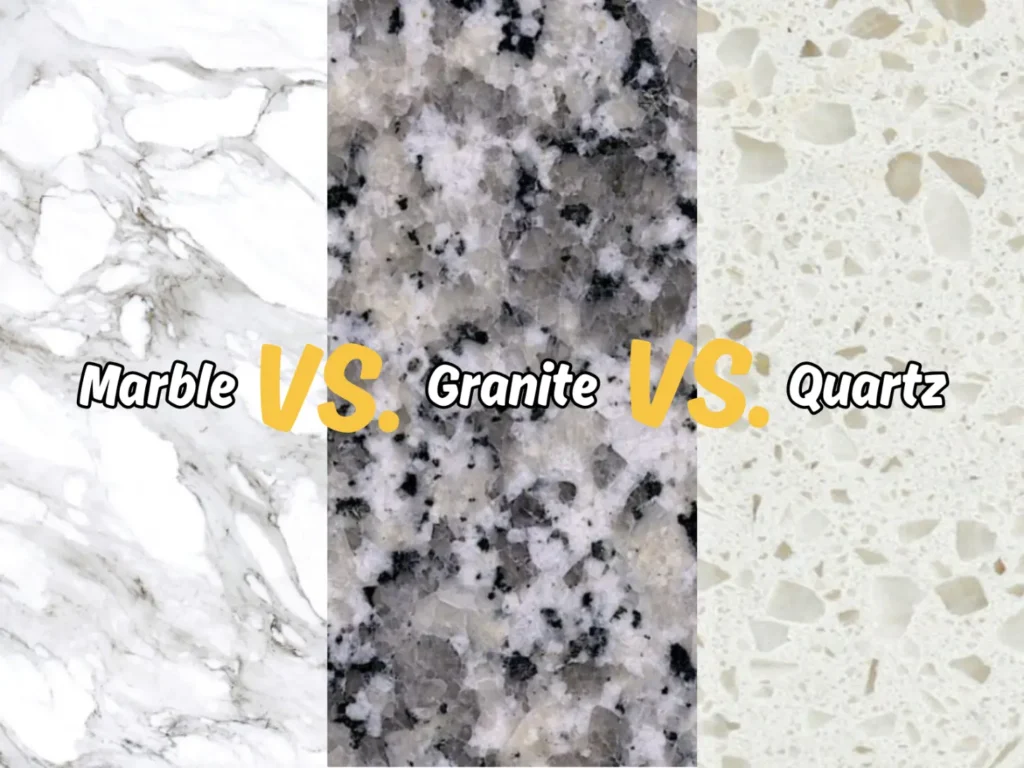
Quartz vs Granite vs Marble: Which Countertop Material Is Right for You?
Quartz vs Granite vs Marble is one of the most common comparisons homeowners make when choosing the perfect countertop for a kitchen or bathroom renovation. However, the countertop isn’t merely the surface; it’s an essential part of the look, feel, and value of your house. Among the variety of countertop materials on the market, quartz, granite, and marble have features that make them ideal for different settings. Knowing the features of these countertop materials will help you make the right decision about which one best fits your vision and needs.
Be it a contemporary kitchen design, an exquisite bathroom design, or any other fancy commercial project, knowledge of their pros and cons will help you make the right choice. This article is a comparative study of these three types of stone in terms of strength, maintenance, appearance, price, and performance.
Understanding the Three Materials
Before comparing them directly, it’s important to understand what each material is.
Quartz
Quartz is an engineered stone product, composed of around 90–95% natural quartz. It is then mixed with good-quality resins and pigments. The result is a very hard and non-porous surface that comes in a variety of colours and styles.
Quartz surfaces are consistent, require minimal maintenance, and offer a contemporary look, which is why they are one of the most commonly used products today.
Best For:
- Contemporary kitchens
- High-traffic homes
- Bathrooms
- Commercial interiors
- Minimalist designs
Granite
Granite is an igneous rock that forms naturally beneath Earth’s surface. Each piece of granite is unique, with its own pattern of minerals, veins, and colouration that can never be replicated.
Its durability and beauty have made granite a popular choice for countertops for many years.
Best For:
- Family kitchens
- Outdoor kitchens
- Luxury residences
- High-use areas
- Contemporary and traditional settings
Marble
Marble is one of the natural metamorphic stones known for its exquisite vein patterns and luxurious appearance. This stone has been utilised in construction and home design for many years and adds timeless elegance to homes, hotels, and businesses.
Even though marble needs more upkeep than quartz and granite, its superior beauty still makes it the top pick.
Best for:
- Luxury kitchen countertops
- Bathroom vanity tops
- Surrounds of fireplaces
- Feature islands
Comparing Quartz, Granite, and Marble
1. Appearance
Appearance is often the first factor homeowners consider.
Quartz
There are several advantages of quartz, including its simplicity and consistency. As quartz is engineered, many colours, textures, and finishes can be created by the producers. Many quartz products resemble the natural stone marble, but quartz is more durable.
Advantages:
- Consistent patterns
- Wide color selection
- Modern aesthetics
- Available in matte and polished finishes
Granite
Granite showcases nature’s uniqueness. No two slabs are exactly alike, giving every installation a one-of-a-kind appearance.
Advantages:
- Abundance of natural patterns
- Special mineral textures
- Variety of natural colors
- Organic quality
Marble
Marble is known for its stunning veins and elegance. It has a unique and timeless aura that very few materials have.
Advantages:
- Classic luxury appearance
- Beautiful natural veining
- Bright, elegant finish
- Premium visual appeal
2. Durability
A countertop should withstand daily use for many years.
Quartz
Quartz is considered one of the most durable countertop materials. The engineered nature of quartz provides for an extremely tough material that is not easily scratched or chipped.
Strengths:
- Highly scratch-resistant
- Non-porous
- Very durable
- Long-lasting
Granite
Granite is very tough and has excellent properties for use in high-activity kitchens. If sealed properly, granite withstands scratches and heat.
Strengths:
- Hard surface
- Heat resistant
- Tough impact resistant
- Good for everyday cooking
Marble
Even though marble is quite strong, it is much softer than granite or quartz and may become scratched and etched with use.
Points to Consider:
- Softer surface
- Easy to scratch
- Etches easily with acids
- Ideal for those who will take care of it
3. Maintenance
Maintenance requirements vary significantly between materials.
Quartz
Quartz requires minimal upkeep because it is non-porous. No sealing is required.
Simply clean with:
- Mild soap
- Warm water
- Soft cloth
Granite
Granite requires periodic sealing to maintain its stain resistance.
Maintenance includes:
- Annual or periodic sealing
- Gentle cleaners
- Regular wiping
- Immediate cleanup of spills
Marble
Marble requires the highest level of care.
Maintenance involves:
- Regular sealing
- Cleaning spills immediately
- Avoiding acidic substances such as lemon juice and vinegar
- Using pH-neutral stone cleaners
4. Heat Resistance
Kitchen countertops are frequently exposed to hot cookware.
Quartz
Quartz is resistant to heat but cannot withstand too much heat. Heat can affect the resin used in its manufacturing. It is recommended to use trivets and hot pads.
Granite
Granite is naturally resistant to heat and works wonderfully with hot pots and pans.
Marble
Marble is also resistant to heat, even though excessive heat should be avoided.
5. Stain Resistance
Stain resistance plays a major role in long-term maintenance.
Quartz
Because quartz is non-porous, it resists stains from coffee, wine, oil, and other household liquids.
Granite
Properly sealed granite offers excellent stain resistance. However, an unsealed surface may absorb liquids over time.
Marble
Marble is naturally porous and more likely to stain if spills are not cleaned quickly.
6. Cost Comparison
Pricing depends on the stone variety, thickness, edge profile, installation, and project size.
Generally:
- Quartz: Mid to premium price range
- Granite: Mid to premium depending on rarity
- Marble: Premium to luxury pricing
While marble often has the highest initial investment, quartz may provide greater long-term value due to its low maintenance requirements.
Which Material Fits Your Lifestyle?
Choosing the right countertop depends on how you use your space.
Choose Quartz If You:
- Want a maintenance-free countertop.
- Prefer modern, consistent designs.
- Have a busy family kitchen.
- Want strong stain resistance.
- Value long-term convenience
Choose Granite If You:
- Love natural stone
- Want every countertop to be unique.
- Need excellent heat resistance.
- Cook frequently
- Appreciate natural patterns and textures
Choose Marble If You:
- Prioritise luxury aesthetics
- Love timeless elegance
- Want dramatic natural veining.
- Are comfortable with regular maintenance
- Desire a statement piece in your home.
Pros and Cons at a Glance
Quartz
Pros
- Low maintenance
- Non-porous
- Highly durable
- Wide color options
- Excellent stain resistance
Cons
- Less resistant to extreme heat
- Engineered rather than fully natural
- Premium options may be expensive.
Granite
Pros
- Natural beauty
- Heat resistant
- Extremely durable
- Unique patterns
- Long lifespan
Cons
- Requires periodic sealing
- Natural colour variations may not suit every design.
- Can absorb stains if neglected
Marble
Pros
- Luxurious appearance
- Timeless elegance
- Beautiful veining
- Adds premium value to interiors
Cons
- Requires regular maintenance
- Can scratch and etch
- More prone to staining
- Higher overall cost
Which Countertop Adds the Most Value?
All three materials can increase the value of your property when professionally installed.
- Quartz appeals to buyers seeking durability and easy maintenance.
- Granite remains a classic choice with broad market appeal.
- Marble is often associated with luxury homes and premium architectural designs.
The best investment depends on your budget, lifestyle, and design goals.
Final Thoughts
There is no single winner in the Quartz vs Granite vs Marble comparison, only the countertop material that best suits your lifestyle, design preferences, budget, and maintenance expectations. Each option offers its own unique advantages, making the right choice dependent on your specific needs and the space you’re designing.
If you desire longevity and maintenance-free countertops, then Quartz would be a wise decision to make. If you prefer the natural look and individuality that stones can bring, then Granite would be your choice. If you value elegance and luxury, then Marble is the best choice for you.
Our company, QMarble, provides a wide variety of high-quality stones such as Quartz, Granite, Marble, Quartzite, Onyx, and others. We make sure that all of our stone surfaces fit the taste and needs of each client. If you want to design your home kitchen, bathroom, or commercial area, our team will be glad to assist you in choosing the ideal stone surface.
Explore our collection today and discover the countertop material that transforms your vision into reality.
