

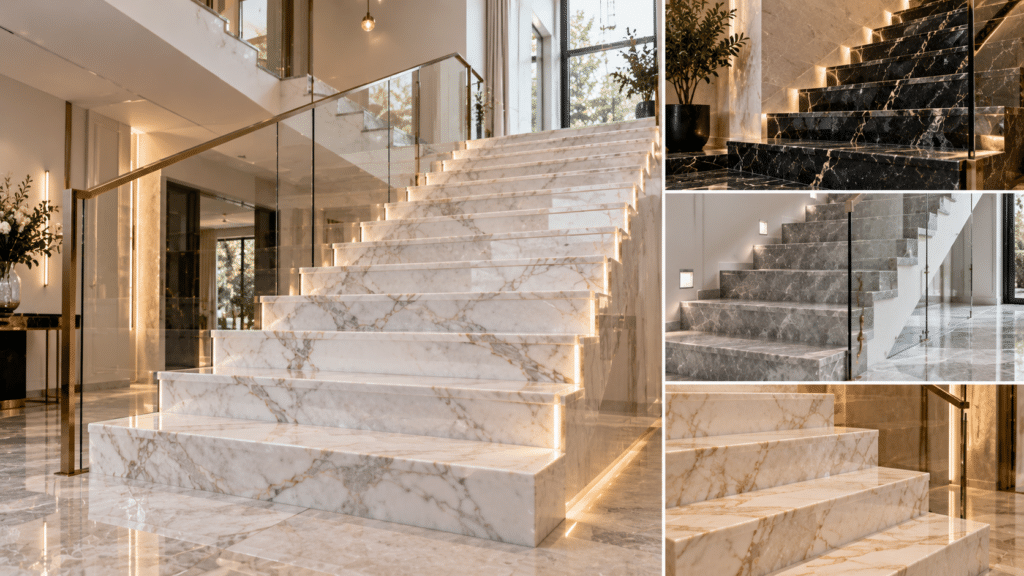
Marble Staircases: Design Ideas, Benefits, Costs & Installation Guide
Marble Staircases can turn an average staircase into an amazing architectural feature in any home or office. With their natural designs, elegant colours, and classic look, marble staircases are popular in luxury properties. There are lots of possibilities for making a staircase which will suit your property style.
A marble staircase is not only an architectural element but also a combination of a number of factors which influence its look and functionality. It includes the type of marble, finishing, thickness, edge shape and even the installation technique. Knowing all of those, you will be able to choose the right option for yourself, either in case of renovation or building.
This guide will introduce you to design ideas, advantages, popular colours and finishes, installation of marble staircases and their prices.
What Is a Marble Staircase?
In a marble staircase, marble can be used for things like the stair treads, risers, and landings, along with any surrounding parts. Depending on the type of design being created, marble can also be used in other components of the staircase, like balustrades, walls, and skirting.
Because of how it can be cut and fabricated, marble is suitable not only for simple residential staircases but also for more complicated designs. When properly fabricated, a Marble Staircase can be made to match up with the rest of the property structure.
Marble Staircase Design Ideas
There are many ways to incorporate marble into a staircase. The right design depends on the property’s architecture, lighting, flooring and overall interior style.
Classic White Marble Stairs
White marble is often used to make a light and classy staircase. The veins in the marble may be used to add a touch of motion to the otherwise plain-looking surface. White marble staircases may complement entrance halls with natural or artificial light shining on the stone surface.
To make a cohesive look, white marble can go well with neutral walls, dark handrails, and glass or metal railings.
Carrara Marble Staircase
The features of Carrara marble include light colouration and soft grey veining. This means that the marble will suit both contemporary and classic designs.
A Carrara marble staircase may help one to achieve elegance in a design without having to add too much drama through patterns. This type of marble may complement light floors, white walls, and wooden surfaces.
Calacatta-Style Marble Stairs
To achieve a more dramatic look for the staircase, veining marbles should be chosen, where the veins will be more noticeable. Calacatta marble is linked to a lighter background and unique veining.
By choosing specific slabs of marble, one can achieve a coherent design. The natural movement of the stone will add luxury and uniqueness to the design.
Dark Marble Staircase
Dark marble can lend an elegant and dramatic look. Black, charcoal and dark marble will be very effective when used in modern designs.
The dark staircase design can be teamed up with light-colored walls, floors and glass. On the other hand, dark marble can be combined with other dark interior features to achieve a bold, luxurious look.
Marble Stairs with a Glass Balustrade
It is possible to build a staircase with an open look when using marble and glass. Glass is a material that allows you to see everything through it; therefore, the focus will still be on marble steps and their pattern.
This can be especially beneficial when designing a modern house because of the openness in design.
Marble Stairs with Metal Details
Materials such as brass, stainless steel, and black metal can be used in combination with marble. Brass may suit well with cream- or beige colored marbles, while black metal would make an interesting contrast against light-colored stones.
Choosing the right handrail and balustrade would change the appearance of the staircase completely.
Popular Marble Colours for Staircases
Marble is available in a wide range of natural colours and patterns. Choosing the right one can help connect the staircase with the rest of the property.
White Marble
White marble offers a sleek and timeless look. White marble can also add some reflections and brightness to an entrance or hallway.
Grey Marble
Grey marble offers a modern look. Grey marble, depending on the natural pattern, can be minimalistic or very dramatic.
Beige and Cream Marble
The beige and cream-colored marble offers a welcoming look. They go great with wood floors and warm metals.
Black Marble
Black marble can make a statement architecturally. This marble is best used where there is a need for contrast as a design element.
Veined Marble
If you have a stairway that needs to make a statement, then veined marble is the solution. Because of the unique nature of the natural veining in each slab of marble, the actual look will depend on which marble you choose.
You can also explore QMarble’s https://qmarble-granite.co.uk/gallery to see examples of its stonework and completed applications.
Benefits of Marble Staircases
Marble is popular for staircases because it combines natural beauty with the possibility of bespoke fabrication. Some of the main benefits include:
- Eternity: Marble has been used in building construction and decoration for years now, and it may be compatible with both classical and modern buildings.
- Individual patterns: Natural marble has unique veining and colour, which means that every marble decoration will be different.
- Custom-made product: Marble decorations can be manufactured according to the specific size of a particular staircase.
- Attention-grabbing: A marble staircase is likely to become the main eye-catching element of the entrance hall or interior space.
- Flexibility: Marble may be combined with glass, wood, metal and other construction materials.
- Versatility: Marble staircases may be installed in private and office buildings, apartments, hotels and other structures.
Choosing the Right Marble Finish
The finish can have a major effect on both the appearance and feel of the stone.
Polished Finish
The polished surface gives an appearance of smoothness and reflectiveness, which brings out the colour and veining of the marble. It is usually preferred when there is a need for an upscale look.
Honed Finish
A finished surface is one which looks softer and more matte. The finished surface may give an up-to-date look without looking too highly polished in contrast to stone.
When selecting a suitable finish for a staircase, other factors have to be taken into account.
How Much Do Marble Staircases Cost in the UK?
Costs associated with installing a marble staircase in the UK may greatly depend on the project. It is impossible to say that there is a uniform price for all marble staircases because projects may differ in many aspects.
The main factors that can affect the cost include:
- Type and grade of marble
- Quantity of stairs
- Size of staircase
- Thickness of marble
- Tread and riser count
- Landing needs
- Edge shapes
- Surface finish
- Complexity of manufacturing process
- Balustrade and handrail needs
- Accessibility to site
- Demolition of existing material
- Installation needs
An ordinary staircase constructed with easily obtainable marble could be quite costly compared to a custom-made staircase that uses good-quality stone and involves intricate workmanship.
The best way to determine the cost, therefore, would be to obtain a quotation on the basis of the specific project.
Marble Staircase Installation Process
Professional installation is an important part of achieving a high-quality result. The process usually involves several stages.
1. Initial Consultation
The discussion about the staircase, measurements, choice of marble, finishing, and other requirements starts at this stage. This is also the point when the aesthetics and functional aspects can be considered.
2. Measuring and Templating
Correct measurement is key to a successful installation. Templates could be drawn so that all components are cut with the exact measurements of the stairs.
3. Marble Selection
Marble slabs of an appropriate colour, pattern, and availability can thus be chosen based on these criteria.
When it comes to marbles that have a heavy vein pattern, the choice of the marble slabs becomes very crucial.
4. Fabrication
The chosen marble stone is then worked to the right measurements and design. This may include the stair treads, risers, landings, and other edges.
5. Installation
The artificial marble slabs are placed correctly on the staircase structure. The correct placement and fit are very important for getting the right finishing effect.
6. Final Inspection
The staircase, once installed, should be inspected for alignment, joints, edges, and general appearance. Finally, any finishing touches can be attended to.
Final Thoughts
Marble Staircases can incorporate nature’s beauty with design and function to create an exceptional element of a building. Whether it is classic white marble, Carrara marble or dark, highly veined marble, there are a wide range of choices for the interior of any building.
The selection of marble, colour, finish, thickness and design of staircase needs to be done as part of the overall interior. Proper measurements, fabrication and installation will also help to create an excellent fit.
For all those who wish to incorporate a unique stone element in their home or office, the professionally designed marble staircase can offer a classic touch to the interior.
Proper maintenance can help preserve the appearance of marble over time. For additional guidance, the Natural Stone Institute’s natural stone care and cleaning guide provides recommendations for cleaning products, spills, sealing and general stone care.
