

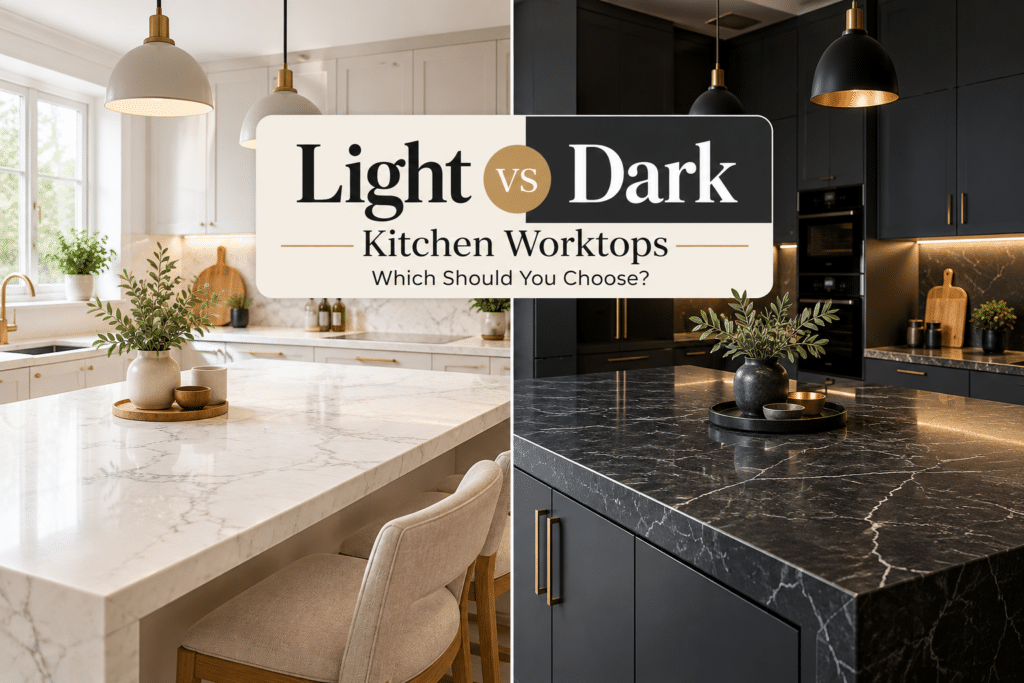
Light vs Dark Kitchen Worktops: Which Should You Choose?
Light vs Dark Kitchen Worktops is a vital aspect to consider while designing your kitchen. The worktop forms the largest part of the kitchen and has a big effect on the appearance and ambience of the entire kitchen. One of the major choices that the homeowners have to make while designing their kitchen is to decide whether to have a light or dark work surface. Both the choices can make an impressive kitchen look; however, both choices have varied visual results and complement different colors, designs, and kitchen layouts.
The Appeal of Light Kitchen Worktops
Light worktops are a popular choice for homeowners who want their kitchen to feel bright, fresh, and spacious. Colors such as white, cream, beige, and light grey can reflect natural and artificial light, helping the room appear more open.
This can be particularly useful in smaller kitchens where creating a sense of space is important. A light surface can work well with both modern and traditional cabinets. It can also provide a clean background that allows other kitchen features, such as colorful cabinets or decorative splash backs, to stand out.
The Benefits of Dark Kitchen Worktops
Dark worktops can create a completely different atmosphere. Shades such as black, charcoal, dark grey, and deep brown can give a kitchen a bold and sophisticated appearance.
A dark surface can provide strong contrast against light-colored cabinets, creating a striking visual effect. It can also work well in larger kitchens where there is plenty of natural or artificial lighting. For homeowners who want their worktop to become a noticeable design feature, a dark surface can be an excellent option.
Light Worktops and Small Kitchens
If your kitchen has limited space, a light worktop may help make the room feel more open. Light colors can reflect available light and create a brighter appearance, which may prevent the space from feeling enclosed.
Combining a light worktop with light cabinets and suitable lighting can create a seamless appearance. However, this does not mean that dark surfaces cannot be used in small kitchens. A dark worktop can still look attractive when balanced with lighter cabinets, walls, and sufficient lighting.
Dark Worktops and Large Kitchens
Large kitchens provide more freedom when choosing darker surfaces. A dark worktop can add depth and definition to a spacious room without making it feel too enclosed.
Dark surfaces can look particularly effective on kitchen islands. For example, a large island with a dark worktop can become a central feature while lighter cabinets around it maintain balance. This combination can create a modern and well-coordinated appearance.
Matching Worktops with Cabinets
Cabinet color is one of the most important factors to consider when choosing a worktop. Light and dark surfaces can both create attractive combinations depending on the desired effect.
Light cabinets paired with a dark worktop can create contrast and make the worktop stand out. On the other hand, light cabinets with a similar light worktop can produce a soft and seamless appearance.
Dark cabinets can be combined with light surfaces to create contrast and prevent the kitchen from appearing too heavy. Alternatively, matching dark cabinets with a dark worktop can create a dramatic and luxurious look.
Considering Natural and Artificial Light
Light can greatly influence the look of the worktop. Daylight may change the color depending on the time of day, while kitchen lighting will have an impact on its look during the evening hours.
Since a darker surface absorbs more visual light, such colors can be great choices for well-lit kitchens. Bright surfaces can serve to lighten up rooms with low levels of daylight.
To decide on which color to choose, take into account the amount of natural light that gets into your kitchen and the lighting in the room itself.
Maintenance and Everyday Use
Appearance is not the only factor to consider. A worktop also needs to suit your daily routine. Kitchens are frequently exposed to food, liquids, crumbs, and other substances, so choosing a surface that fits your lifestyle is important.
Both light and dark worktops require appropriate care. The visibility of marks can vary depending on the color, finish, and material. Rather than choosing a color based only on maintenance concerns, consider the manufacturer’s care recommendations and choose a material that suits your everyday needs.
Choosing the Right Material
Color is only one part of the decision. The material of your worktop is also important. Quartz, marble, and granite can all provide different appearances and characteristics.
Quartz worktops are available in many light and dark designs, making them a flexible option for different kitchen styles. Marble can provide distinctive natural patterns, while granite offers natural variations that can give a kitchen a unique appearance.
When comparing materials, consider durability, maintenance, appearance, budget, and how frequently the kitchen will be used.
Which Option Is More Modern?
There is no single answer because modern kitchen design can include both light and dark surfaces. Light worktops often suit minimalist and contemporary kitchens because they create a clean and open appearance.
Dark worktops can also look highly modern, particularly when combined with sleek cabinets, simple hardware, and good lighting. The best choice depends on the overall design rather than whether the color is light or dark.
How to Make the Final Decision
Start by looking at your existing kitchen features. Consider your cabinet color, wall color, flooring, lighting, and kitchen size. You can then decide whether you want the worktop to blend with these elements or create contrast.
It is also helpful to think about your personal style. If you prefer bright and airy spaces, a light surface may be more suitable. If you prefer bold and dramatic interiors, a dark worktop may better match your taste.
Most importantly, choose a surface that you will enjoy seeing and using every day. A well-selected worktop should balance appearance, practicality, and the overall character of your kitchen.
Conclusion
Light vs Dark Kitchen Worktops ultimately depend on your kitchen size, lighting, design, and personal style.
- Light surfaces can create a bright, clean, and spacious feeling, especially in smaller kitchens.
- Dark surfaces can add depth, contrast, and a bold appearance to larger or well-lit spaces.
- Both options can complement different cabinet colors and interior styles.
- The material, maintenance requirements, and everyday use should also be considered before making a decision.
- By comparing all these factors, you can choose a worktop that suits both your practical needs and design preferences.
- With the right choice, your worktop can become an attractive and functional part of your kitchen for years to come.
