

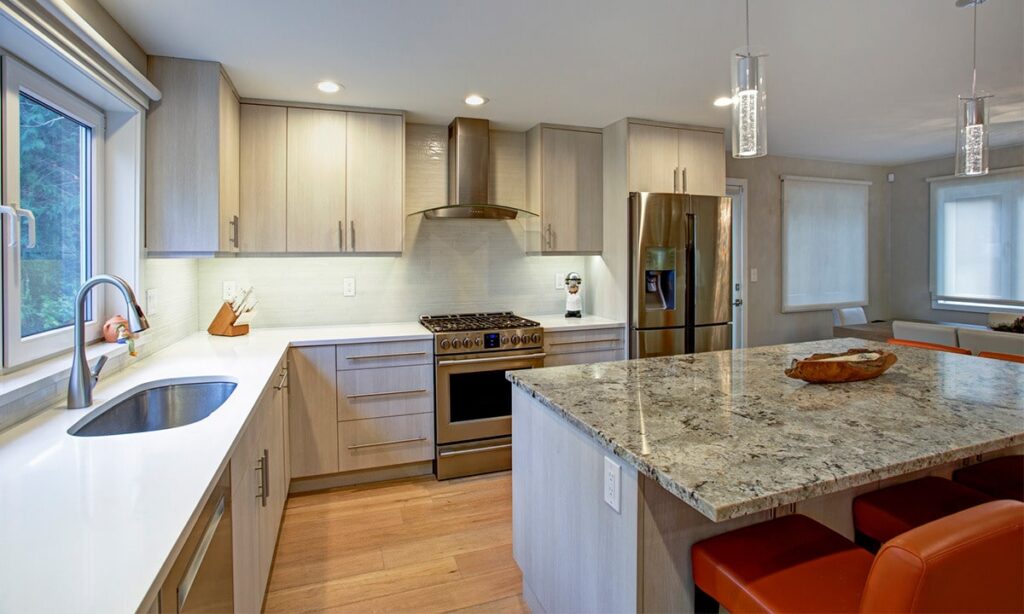
Granite, a natural stone, is renowned for its timeless beauty and durability of granite, making it a popular choice for high-traffic areas. Its intrinsic properties, such as interlocking crystals, provide exceptional hardness, making it resistant to scratches and chipping. This makes granite ideal for bustling environments. Real-life examples of granite installations in commercial and residential settings illustrate its versatility and timelessness. This blog explores the remarkable durability of granite, its benefits, and its resistance to wear and tear. It also discusses the various finishes and treatments available to enhance its performance. By the end of this exploration, readers will understand why granite is a top choice for high-traffic areas and how to maintain and care for it to ensure its longevity properly.
Granite’s Composition: What Makes It So Tough
Granite is an igneous rock created by cooling and solidifying lava. Its principal constituent minerals are quartz, feldspar, and mica, which contribute to its hardness and density. This durability of granite is frequently tested using the Mohs scale, where it rates between 6 and 7, making it one of the hardest natural materials accessible. Granite’s exceptional hardness can resist significant wear and tear, making it an excellent choice for heavy-traffic areas.
Why Choose Granite for High-traffic Areas?
Granite has many advantages that make it a perfect choice for high-traffic areas such as corridors, kitchens, retail malls, airports, and commercial buildings. These areas see a lot of foot activity regularly, and granite’s particular qualities provide various advantages in these settings.
Scratch Resistant
One of the most significant advantages of granite is its scratch resistance. Granite is especially durable in high-traffic areas where shoes, dirt, and other abrasive elements come into touch with the floor. Its robust surface resists scratches and scuffs, allowing it to look fresh for years.
Stain Resistant:
Granite is also less porous than other natural stones, thus does not absorb liquids as quickly. Accidental spills are unavoidable in high-traffic locations such as restaurants and retail malls, but with proper sealing, granite resists discoloration and stays cleanable.
Heat Resistance:
Another reason granite is popular in kitchens and other high-heat areas is its ability to tolerate high temperatures. It will not break or be damaged by hot pans or other heat sources that may come into contact with it.
Granite in commercial spaces such as hotels, restaurants, and airports
In business settings, granite is frequently used for flooring options, countertops, and walls. Here’s how it performs in certain high-traffic environments:
Hotels:
Granite’s rich colors and polished surface offer a strong first impression in the lobby. Its floors and countertops can survive regular use without displaying signs of wear.
Restaurants:
Granite worktops withstand heat from cooking and the continual movement of tools, making them a sanitary choice for food prep rooms.
Airports:
Granite flooring is used because it is durable, can endure continual movement from baggage wheels and industrial cleaning machines, and requires less upkeep.
Granite against other materials in high-traffic areas.
High-traffic areas often see better performance from granite compared to alternative material options. Here’s a comparison between granite and several other regularly used materials:
Granite versus marble.
Marble is softer and more prone to scratches and etching, necessitating regular maintenance in high-traffic areas. Granite is more durable and requires less upkeep in high-use places.
Granite vs. Ceramic Tile
Ceramic tiles are outperformed by granite in terms of resistance to cracking and chipping during large loads. Granite provides a natural, high-end appearance that ceramic tiles cannot match.
Granite vs. Concrete:
While sturdy, concrete lacks the elegance and luxury of granite. Staining and cracking are common issues with concrete, while granite is more resistant.
Maintenance Guidelines for Granite in High-Traffic Areas
Despite its durability, granite requires adequate maintenance to survive many years, even in high-traffic areas. Here are some maintenance recommendations to keep your granite surfaces looking great:
Sealing:
Seal granite regularly to minimize discoloration and moisture absorption. Seal high-traffic areas every 1 to 2 years.
Daily Cleaning
To prevent the surface from becoming dull, use a moderate, pH-balanced cleaning.
Avoid using acidic or abrasive cleaning agents.
Regular cleaning in high-traffic areas to remove grime and debris.
Preventative Measures
Place rugs or mats in high-traffic areas to minimize wear and tear on the floor.
Use rugs in entryways to trap dirt and dampness.
Polishing
Periodically polish granite surfaces to retain luster and protect them from daily damage.
Conclusion
Granite’s durability makes it an excellent choice for high-traffic places like hotels, restaurants, airports, and retail centers. Its natural formation and durability against scratches, heat, and stains ensure sense remains appealing even after extensive use. This makes it an excellent investment for business or public venues. Granite’s diverse color and pattern options allow for unique designs. Granite offers a welcoming environment for customers and visitors by combining elegance and durability. With proper care and maintenance, granite will last for generations.
