

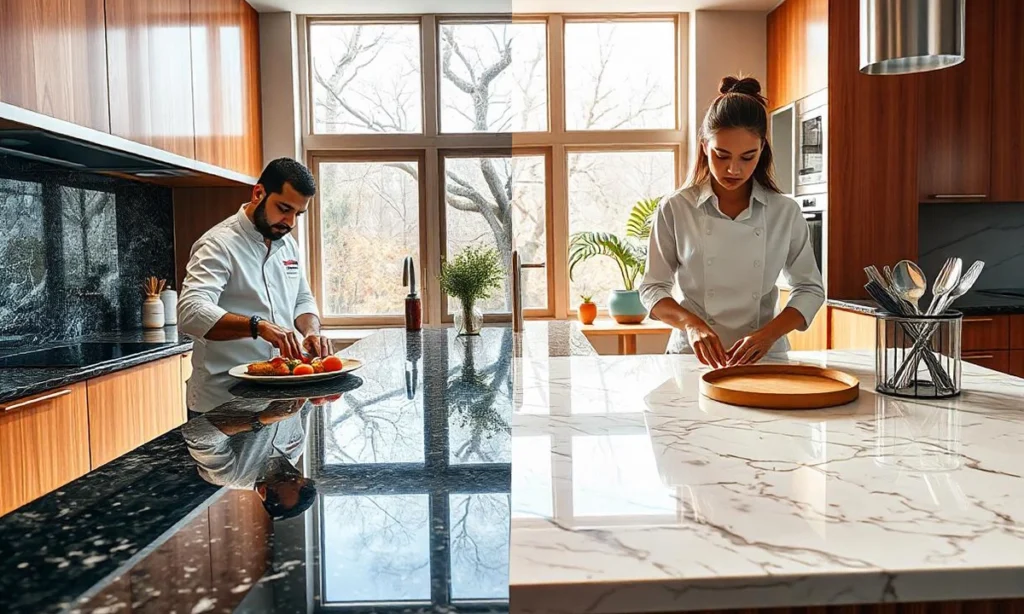
Kitchen Countertops are a crucial component of design that can improve the room’s attractiveness and utilization. Two of the most common options are granite and marble, which provide elegance and classic beauty to the center of the house. The key query, though, is which stone is best for kitchens. I want to assist you in making an informed choice for your kitchen renovation.
In this blog, we explore the distinctions between granite and marble, two common and wealthy materials for kitchen countertops. Both stones have special beauty and useful benefits, but choosing one over the other is essential for a kitchen design that balances the two. It seeks to assist readers in selecting the stone that will work best in their ideal kitchen.
Stone’s Organic Beauty in Kitchens
Natural stones like granite and marble radiate refinement and elegance in kitchens. They improve the overall appearance by adding an organic, earthy feel. Granite, made of molten lava, has a rough, polished appearance and is sprinkled with minerals such as feldspar and quartz. Marble, on the other hand, has unique veins generated by mineral deposits and is metamorphic, meaning it was developed from limestone over time. Both stones add to the overall beauty of a kitchen and make striking statements in interior design.
How Hard Are They to Durability?
Since kitchen countertops are frequently the most exposed places in the space, durability is an important consideration when choosing a material.
Granite
Granite is renowned for its extraordinary power. Because it is a solid, hard stone made of volcanic magma, it is extremely resistant to heat, stains, and scratches. If you cook frequently, this is the perfect surface to handle hot pans and sharp knives without displaying signs of wear and tear.
Marble
Marble is softer than granite overall. Despite its obvious beauty, it is more vulnerable to etching and scratches, particularly from acidic materials like vinegar or lemon juice. Marble is better suited for homeowners who choose beauty over tough use because it can deteriorate over time if not properly maintained.
Appearance: Kitchens’ Visual Appeal
Marble and granite provide unparalleled elegance, although they differ in appearance.
Granite
Granite is a natural, durable stone that comes in various hues and patterns and is perfect for kitchen countertops because of its distinctive, striking look. Each slab is distinct because of its organic, rough texture, which makes it the ideal option for a vibrant kitchen.
Marble
Marble, renowned for its elegance, is a timeless and opulent stone. It usually comes in white or gray hues with delicate veins. It gives a sophisticated touch to any kitchen, making it the perfect option for designing a spacious, elegant, and bright area.
Which Stone Needs More Care in Terms of Maintenance?
You need to consider the amount of maintenance required to keep your countertops looking their best. The kitchen may be an untidy place, let’s face it.
Granite
Granite requires yearly sealing to preserve its integrity and stop moisture seepage, ensuring its beauty and functionality for many years. Granite is a low-maintenance material that is excessively resistant to stains and scratches.
Marble
Marble is a high-maintenance material because of its porous structure, which absorbs spills readily and is prone to etching from acidic meals or cleaning chemicals. It must be sealed regularly to protect its surface, which requires more maintenance than granite.
Cost: Which option is most affordable?
The cost of granite varies depending on the quality and origin of the stone, however, it is normally less expensive than marble.
Granite
Granite costs including installation per square foot, with exact rates determined by criteria such as rarity, slab size, and installation complexity.
Marble
Marble countertops are beautiful and expensive, ranging depending on the stone grade. However, if regular maintenance is not performed, long-term costs might accrue.
Heat and Stain Resistance: Which Is Better?
Kitchens are full of heat sources, from hot pots to boiling water, so it’s critical to select a countertop that can resist extreme temperatures.
Granite
Hot pans and pots can be placed directly on it without causing damage to this heat-resistant surface. With adequate sealing, it can withstand most stains.
Marble
Although heat-resistant, it can still stain from dark liquids like wine or coffee. Marble is crucial to wipe spills immediately and use trivets or mats to prevent damage.
Long-Term Value: Which Stone Provides More?
If you’re looking for resale value or long-term appeal, granite and marble add significant value to a property in different ways.
Granite
Granite is a practical choice for homes looking for durability and ease of care. Its long lifespan and low maintenance make it a wise investment for busy households.
Marble
Marble, a luxurious and sophisticated stone, is a popular choice for individuals who value aesthetics and maintenance, as its ageless elegance can increase a home’s perceived worth.
Personalization: Constructing Countertops Unique
One of the delights of personalizing a natural stone to your preferences is its ability to do so. You can have marble and granite carved and cut to precisely match your kitchen’s layout and style, making your countertops uniquely yours.
Granite
Granite comes in various finishes, such as polished, honed, and leathered, each with exceptional physical and aesthetic impact. While honed finishes are matte and understated, polished granite offers a smooth, reflecting surface perfect for a laid-back kitchen setting.
Marble
Frequently, smooth veins in marble require polishing, but a honed finish, which gives it a more subtle appearance, necessitates more frequent sealing to preserve the surface.
Conclusion
Your aesthetic tastes and way of living will determine whether you choose marble or granite. Granite is ideal for families with busy kitchens because of its dramatic shapes, low maintenance requirements, and durability. Marble, on the other hand, delivers elegance, luxury, and upkeep investment. It is a staple in upscale culinary settings due to its classic elegance and delicate veining. Marble and granite have unique benefits, but it’s important to consider how each fits into your kitchen’s design. Making an informed decision will be easier if you are aware of the characteristics of each stone.
