

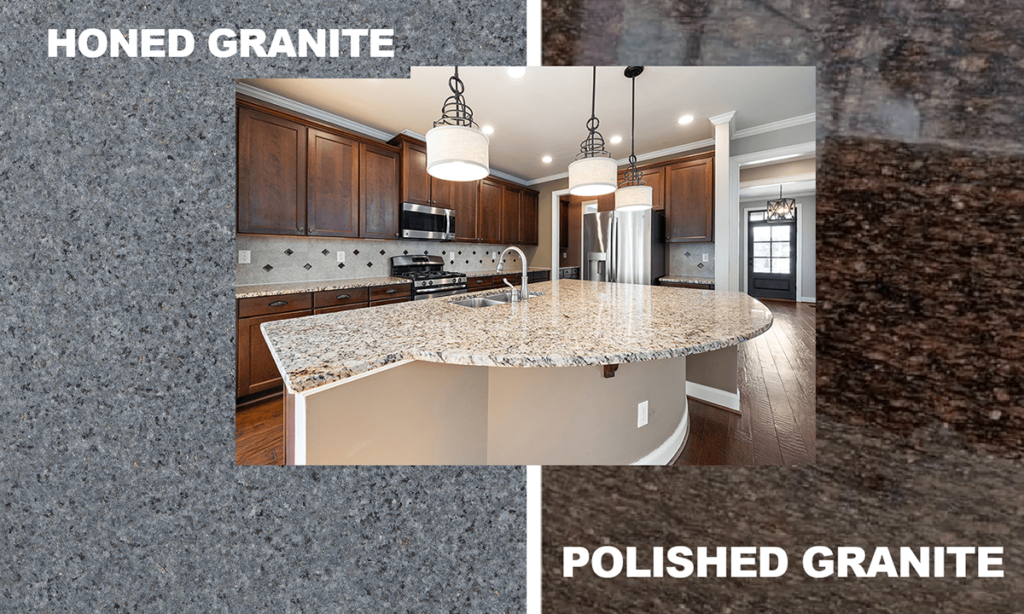
In residential and commercial settings, granite finishes and materials are favored for their durability and aesthetic appeal. When selecting granite, one reason you will face is between honed and polished finishes. Understanding the differences between these two finishes is crucial in making an informed decision that best suits your design and functional needs. Understanding the differences between honed and polished granite can help you make an informed choice that best suits your space.
Understanding Granite Finishes:
One of the most widely used materials for floors, countertops, and other Surface Comparisons in residential and commercial buildings is granite. It is the best option for many applications due to its inherent beauty, toughness, and variety. But, because each finish has distinct qualities and advantages, it’s crucial to comprehend them all while choosing granite. Granite that has been polished or honked are two of the most popular finishes. You will learn about different finishes, how they differ, and how to select the best one for your requirements with the aid of this guide.
Honed Granite
Definition and Appearance:
It is granite that has been ground to a smooth, matte finish, rather than a glossy one. The honing process involves grinding the surface with abrasive pads, which remove the polished layer and leave a flat, smooth surface. The result is a softer, more natural look that diffuses light rather than reflecting it.
Texture and Feel:
Honed granite has a velvety texture that feels soft to the touch. This finish can vary from a completely matte surface to one with a slight sheen, depending on how finely the granite is honed. The lack of gloss gives honed granite a more understated and contemporary appearance.
Advantages:
- The matte finish of honed granite makes scratches and imperfections less visible compared to polished granite. This makes it a good choice for high-traffic areas and surfaces that are frequently used.
- Honed granite is less slippery than polished granite, making it a safer option for flooring, particularly in areas that may get wet, such as bathrooms or kitchens.
- The subtle, non-reflective surface of honed granite provides a more natural and rustic look, which can be appealing to those seeking a more organic and understated design.
Disadvantages:
- Honed granite is more porous than polished granite, making it more susceptible to staining. Regular sealing is essential to protect the surface from spills and stains.
- While scratches are less visible, honed granite can show fingerprints, watermarks, and smudges more easily. Regular cleaning and maintenance are required to keep it looking its best.
- The matte finish can mute the vibrant colors and intricate patterns that are often found in granite, which might be a drawback for those looking to highlight these features.
Polished Granite
Definition and Appearance:
Polished granite is granite that has been buffed to a high-gloss finish. It is achieved through a series of polishing wheels, which gradually smooth the surface until it shines. Polished granite is highly reflective and can make a bold statement in any space.
Texture and Feel:
The texture of polished granite is smooth and glass-like. It feels sleek and cool to the touch, providing a luxurious and sophisticated look. The polished finish enhances the natural colors and patterns in the granite, making them more pronounced.
Advantages:
- Aesthetic Appeal: The glossy finish of polished granite accentuates the stone’s natural beauty, bringing out the rich colors and intricate patterns. It adds a touch of elegance and sophistication to any space.
- Stain Resistance: Polished granite is less porous than honed granite, making it more resistant to stains and easier to clean. Spills can be wiped away quickly without worrying about permanent damage.
- Light Reflection: The reflective surface of polished granite can make a room appear brighter and more spacious by bouncing light around the space.
Disadvantages:
- Scratch Visibility: Scratches and etches are more noticeable on polish granite due to the reflective surface. Care must be taken to avoid damage from sharp objects and abrasive materials.
- Slip Hazard: Polished granite can be slippery, particularly when wet, making it less suitable for flooring in areas where safety is a concern.
- Higher Maintenance: While easier to clean stains, polished granite shows dust, smudges, and fingerprints more readily, requiring frequent wiping to maintain its glossy appearance.
Choosing the Perfect Finish: It’s All About Your Preferences
Ultimately, the choice between honed and polished granite boils down to your personal preferences and lifestyle. Here’s a quick guide to help you decide:
- Opt for Polished Granite if you prioritize a high-shine, reflective surface that showcases the vibrancy of the stone. You appreciate easy cleaning and a brighter kitchen or bathroom.
- Select Honed Granite if you prefer a more understated and natural aesthetic. You desire a surface that hides minor imperfections and offers a better grip when wet. You’re willing to invest in regular sealing and slightly more involved cleaning.
The Final Touch: A Countertop that Complements Your Home
Granite, whether honed or polished, elevates any kitchen or bathroom with its timeless elegance and natural beauty. By understanding the subtle differences between these granite finishes, you can make an informed decision that complements your design style and ensures a functional and aesthetically pleasing countertop for your family for years to come.