

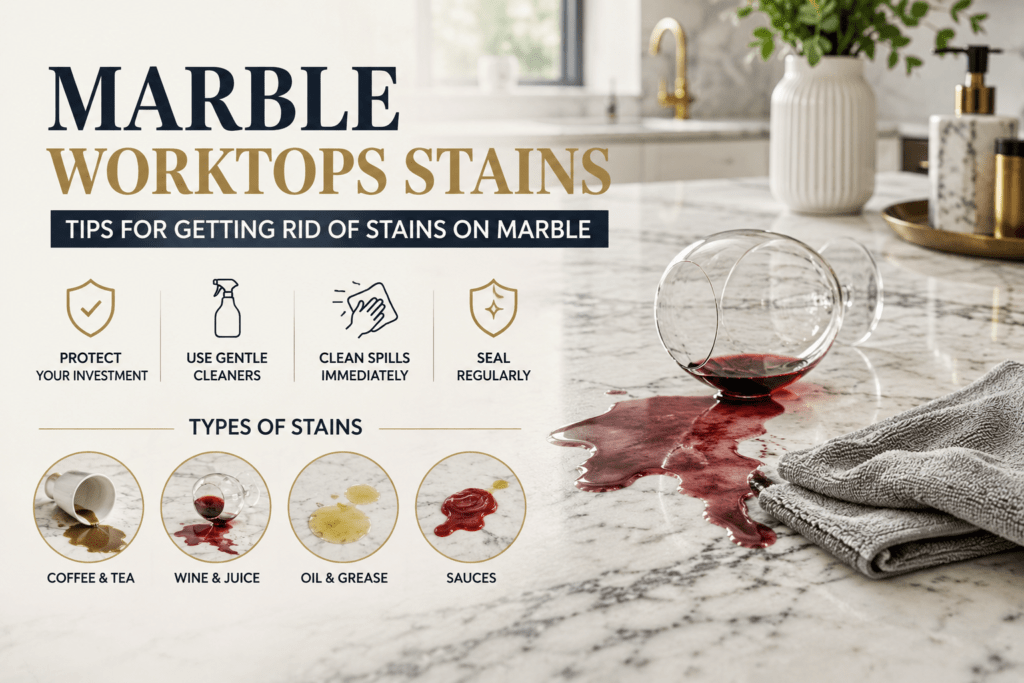
MARBLE WORKTOPS STAINS –Tips for Getting Rid of Stains on Marble
Marble Worktops Stains are something to look out for, as they are not only aesthetically unappealing but may also indicate damage to your investment. The marble kitchen surfaces are associated with luxury, elegance, and beauty due to their unique design. However, marble is a type of porous natural stone that tends to absorb spills easily. Therefore, learning how to get rid of these stains in the safest manner is the key to having an elegant kitchen surface for a long time. Using effective cleaning products and approaches will allow you to remove stains without damaging the stone surface.
Marble is a fragile and relatively soft stone when compared with granite or other natural stones. This means that using aggressive methods in the process of cleaning is likely to damage the stone rather than clean it. Therefore, homeowners need to apply the techniques of safe cleaning of their kitchen worktops. The first thing one needs to do is identify the type of stain.
Why Marble Gets Stained So Easily
The natural pores of marble can take in any liquid, including coffee, tea, wine, lemon juice, cooking oil, and sauces. The liquids left on the surface for too long will eventually go through the pores and create permanent discolorations. The problem with acidic foods is that they may not only stain the surface but also etch it, creating dull spots on polished marble.
Quick action when cleaning the spills is always the best way to avoid any problems with stains.
MARBLE WORKTOP STAINS
Prevention is always the key in any case, and it is very simple to prevent stains by keeping your marble clean using gentle cleaning products and immediately cleaning up any spillages. You should always be careful not to allow any acidic liquids, or those that have strong colours, like wine, coffee, lemon juice, or vinegar to come into contact with your marble floor.
Types of Stains on Marble Worktops
It is very important to know the source of the stain in order to treat it properly and choose the right method.
Stains caused by food and drinks
Among the most popular reasons for kitchen staining there are coffee, tea, fruit juices, sodas, wine, and sauces. Such spills have to be cleaned away immediately with the help of a soft microfiber cloth and warm water. If the stain persists, it is better to use pH-neutral stone cleaner. Allowing liquids such as food and drinks to sit for prolonged periods of time on marble may result in the penetration of the liquid into the surface making it harder to clean up. Cleaning up promptly not only avoids stains but also preserves its polished look.
Stains from Oil and Grease
Oils, butter, or greasy foodstuffs may result in dark spots on Marble countertops. To treat such stains, use some baking soda and create a paste with water. Apply the mixture carefully, cover with plastic wrap for several hours, and then wipe it off. It is advisable not to use abrasives or aggressive cleansers, since they may scratch or even damage the marble surface. It is necessary to clean up grease and oil stains immediately to avoid their absorption by the marble surface.
Stains from Coffee or Tea
Brewed beverages may cause stains on marble surfaces if they are not cleaned immediately. It is sufficient to use a safe marble cleaning solution to eliminate fresh stains. However, when dealing with old stains, it may be required to repeat the cleaning procedure several times. Do not scrub the surface hard, since doing so may damage the polished surface of the marble and make it appear dull.
Safe Products to Clean Marble
In addition to cleaning techniques, choosing proper cleaning products is essential. Do not use bleach, vinegar, lemon juice, ammonia, or other strong household cleaners since these chemicals may harm the polished surface of marble countertops.
Use only warm water, a soft cloth, mild dish soap, or natural stone cleaners instead.
Prevention of Damage During Cleaning
It is a frequent occurrence that homeowners harm their marble worktops by scrubbing with tough brushes and pads. Always clean the surfaces with a microfiber cloth or a sponge that is not abrasive because gentle rubbing motions will enable you to remove any marks without damaging the surface. It is important not to apply excessive force while cleaning the polished marble, which might result in scratches on the surface.
Sealing protects the surface from absorption and minimizes the chances of it getting stained. Nonetheless, sealing does not guarantee that the marble will never get stained. Spills should still be cleaned promptly to prevent liquids from penetrating the stone and leaving permanent marks.
For more detailed guidance on natural stone care, including cleaning, sealing, and stain prevention, homeowners can refer to the Natural Stone Institute
Conclusion:
Although Marble Worktops Stains may impact the look and condition of your kitchen surface, with appropriate maintenance and cleaning techniques, the majority of them can be prevented or easily treated. Marble worktops are the best way to give your kitchen an elegant and luxurious look; however, being a porous material, they should be regularly maintained and cleaned.
The first thing that is necessary is to identify the type of stain in order to know what kind of treatment is needed. The food, beverages, coffee, tea, oils, grease, etc. may leave the stain on the surface of marble worktop if the spillage was not washed immediately. Warm water, a mild cleaner, a microfiber cloth, or a non-abrasive sponge can be used to wash stains and dirt from your kitchen surface without damaging it.
It is also very important to avoid using harsh cleaners and abrasive substances, scrubbing brushes and pads because they may damage the surface and create dull spots. Regular sealing of the surface provides an additional layer of protection, making the marble less absorbent, but it still cannot make it resistant to staining.
So, with appropriate maintenance and cleaning of marble worktops, homeowners may enjoy its beauty for many years.