

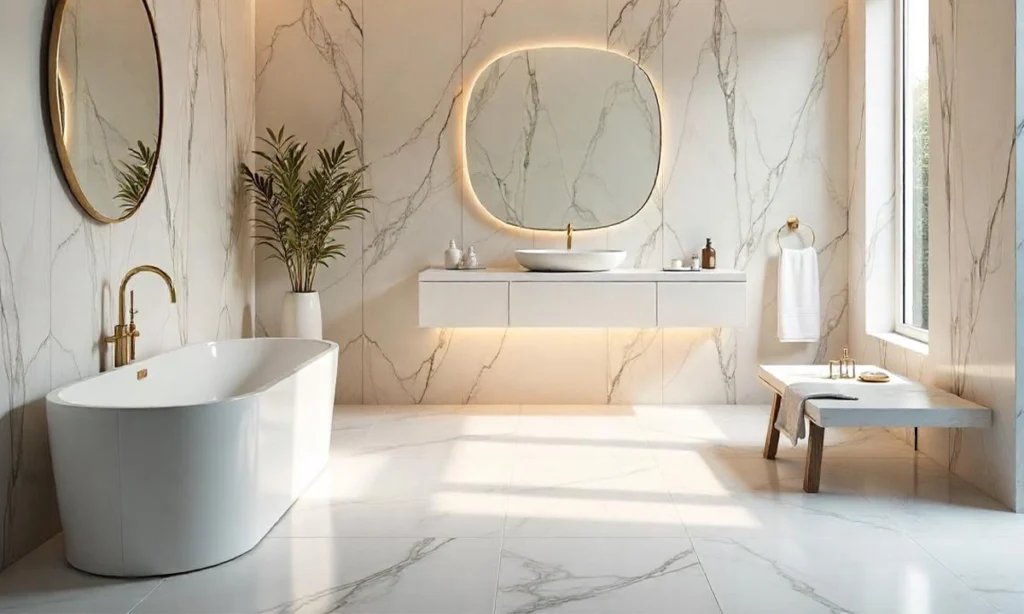
Modern marble design is reviewed for architectural trends, a classic and stunning material, thanks to design innovation, sustainability principles, and technological breakthroughs. This change improves marble’s aesthetic appeal and adaptability by enabling previously impractical complex patterns and shapes. The use and sourcing of marble are being re-examined in light of the increased focus on sustainability in design. By choosing locally made marble and using eco-friendly extraction methods, designers can lessen the material’s damaging environmental effects. In addition to addressing environmental issues, this dedication to sustainability enhances marble’s status as a material that can be tailored to ethical design concepts.
Marble’s Everlasting Appeal in Architecture
Marble has long been notable in architectural trends because of its rich texture, distinctive veining, and opulent appearance. Marble has historically been used for facades, columns, and elaborate interiors. But thanks to modern technology, designers may now use marble for more than traditional purposes, increasing its use in trendy projects.
Modern innovations are driving Marble Design.
Eco-friendly methods and sustainable sourcing
Due to increased knowledge of sustainability, the marble industry is implementing more environmentally friendly practices. Design innovations such as energy-efficient cutting technology, zero-waste quarrying, and recycling marble fragments into new goods pave the way for a cleaner future for marble use.
Marble Panels That Are Lightweight for Increased Flexibility
New technical processes make ultra-thin marble panels that drastically save weight without sacrificing the strength possible. Because these panels are simply fixed on various surfaces, they add elegance and versatility to architectural design, opening new design options for interiors and exteriors.
Utilizing Marble Dust for 3D Printing
3D printing technology is revolutionizing the use of marble by adding marble dust to printable building materials. This makes it possible for architects to use marble to create unique shapes and designs, producing fine, artistic features that would be difficult to achieve with more conventional sculpting techniques. As a result, modern marble design is approached creatively and economically.
The Trends in Marble Installations for Modern Architecture
Minimalist Marble Interiors
Modern homes adopt minimalist aesthetics, with marble used in clean, unobtrusive designs. Subtle marble tones in countertops, floors, and wall cladding offer a clean, sophisticated style that complements today’s minimalist architectural trends.
Mixed Material Designs with Marble and Metals
Combining marble with metals such as brass, copper, and stainless steel gives interiors a contemporary feel. This combination of materials produces a striking, sophisticated contrast that enhances marble’s natural attractiveness, making it a prominent point in kitchens, baths, and living rooms.
Marble as a Structural Skin.
The concept of marble facades is redefined with ventilated stone facades and lightweight marble panels. These “skins” protect buildings from the weather while adding a distinctive visual texture. Such designs also provide improved thermal insulation, making marble-clad structures more energy-efficient.
Advances in Technology in Marble Design
Digital Shading and Marble Matching
Advances in digital scanning and design software allow architects to arrange marble layouts and precisely match veining patterns over enormous surfaces. This enables exact installations and visually seamless environments, which improves marble’s aesthetic appeal in large-scale applications.
Visible and backlit marble elements
Specific forms of marble, such as onyx, have sparked a new trend in backlit installations because of transparency. When illuminated, these panels cast a fascinating glow, making them suitable for feature walls, hotel lobbies, and luxury retail locations that demand a standout element.
Elegant Marble with Connected Technology.
Marble slabs are being produced to incorporate elegant technologies such as LED illumination and sensor-based systems. This design innovation gives marble an interactive dimension, making it ideal for areas such as modern office buildings and public exhibits that require technology integration.
New Marble Colors and Finishes
Bold Color Trends in Marble
Admittedly, white and gray marbles are still good sellers, but I am also seeing interest in more exotic marble colors: deep greens, blacks, and pinks. These bold shades categorically enhance the depth of spaces, enabling designers to play with juxtaposition and infuse more character into their endeavors.
Textured and matte marble finishes
Classic polished marble and modern architecture also accommodate matte or textured finishes with a more restrained and contemporary touch. These finishes allow the same lowered elegance in spaces where a more toned-down look is required and fit both domestic and commercial interiors.
From Idea to Execution: Prototype Marble Spaces
Marble Stairs and Walkways Floating
Nowadays, marble is used to make “floating” constructions like walkways and staircases. Thanks to lightweight panels and hidden support, these works provide a striking visual impact that balances power and beauty by appearing weightless.
Marble Installations Outside
Marble is becoming increasingly popular in outdoor construction and landscaping outside interior design. It’s utilized more in outdoor seating, garden walls, and fountains. Due to its inherent resilience to weather and durability, marble is a lavish option for environmentally friendly outdoor areas.
Marble Sculptures in Public Areas
Large marble sculptures are increasingly used as the focal point of public art displays, providing communities with enduring, exquisite works that bridge the gap between the arts and the environment. Because of its classic appearance and versatility, marble is a suitable option for installations that combine functionality and artistry.
Future Prospects: Marble in Sustainable and Smart Architecture.
Marble’s Use in Green Architecture
As builders seek sustainability, marble’s natural heating qualities and durability make it a usable material. When combined with energy-efficient design ideas, marble can assist minimize a building’s carbon footprint by managing temperature and lowering energy requirements for heating and cooling.
Biophilic Design with Marble’s Natural Beauty
Biophilic design is an emerging movement that incorporates nature into buildings. Marble’s inherent patterns and organic beauty make it an excellent material for bringing nature indoors, improving well-being, and fostering harmony between constructed settings and the natural world.
Conclusion
Marble’s versatility in building materials is gaining popularity due to its adaptability to new needs and capacity to reduce waste. As society values sustainability, marble is used in novel ways to promote environmentally friendly behaviors and technology. Advances in quarrying and processing techniques improve marble’s durability and design potential. As designers and architects keep trying, marble. It will redefine elegance and practicality in living spaces, bridging the divide between traditional craftsmanship and cutting-edge technology. This combination of marble with modern design ideas shows a trend in building that prioritizes aesthetics and sustainability.
