

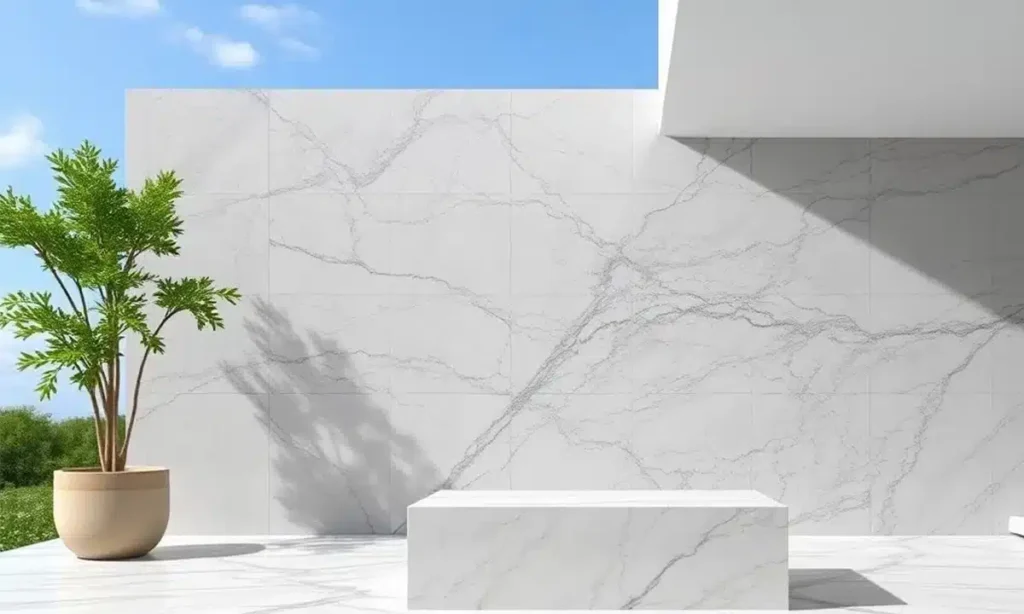
Eco-friendly marble and granite are becoming more and more popular in green buildings because of their advantages for the environment.
These classic, resilient materials are obtained locally, contribute to local economies, and offer lifespan and waste reduction. Additionally, they have inherent thermal qualities that help buildings use less energy. Furthermore, compared to synthetic substitutes, marble and granite require less chemical cleaning and treatment, making them low-maintenance materials. This helps ensure that building occupants have healthy indoor air quality. We can comprehend their attraction to greener construction solutions better by looking at their practical applications, aesthetic variety, renewable resources and environmental benefits.
Comprehending Green Construction
Green construction, sometimes called sustainable building, is an all-encompassing method of planning and creating structures that emphasize reducing their negative effe
cts on the environment. It combines sustainable materials, indoor air quality, water conservation, energy efficiency, and indoor air quality to build ecologically conscious and functioning structures. Green architecture has grown in importance in the architectural environment as ecological preservation and climate change awareness have spread throughout the world. This method improves inhabitants’ quality of life while also encouraging a healthier environment.
A History of Green Building Strategies
Green architecture has its origins in ancient civilizations’ use of local resources and materials to build sustainable dwellings. The late 20th century saw a rise in the popularity of the idea because of environmental consciousness. The 1970s energy crisis prompted the creation of groups such as the U.S. Green Building Council (USGBC) in 1993, which went on to create the LEED certification. With the addition of cutting-edge technologies and eco-friendly marble and granite, the movement has developed.
The Special Features of Green Construction
The dedication of green building to sustainability in all facets of construction distinguishes it. This comprises:
Efficiency of Resources:
Efficiency of resources using recyclable, sustainable or renewable resources materials.
Energy Effectiveness:
We are putting in place mechanisms that lessen energy usage and dependency on fossil fuels.
Conserving Water:
We are utilizing water-saving fixtures and technologies.
Quality of Indoor Air:
They ensure that building materials don’t release toxic emissions to produce a healthier living environment.
Green buildings prioritize these components to minimize their defeat effects on the environment and generate income through lower utility costs and higher property values.
Granite and Marble’s Place in Sustainable Building Techniques
The use of natural stone, especially granite and marble, is valuable to the green building movement. These materials are obtained from quarries and have unique characteristics that make them perfect for environmentally friendly buildings. Their enduring quality, minimal upkeep requirements, and visual allure make them a popular choice for various uses, including countertops, flooring, and external cladding.
Natural Stone Components
Durability:
Marble and granite frequently surpass the lifespans of synthetic materials, making them incredibly resilient. Because of their durability, fewer replacements are required, which makes them an environmentally friendly option.
Thermal Density:
These stones aid in controlling interior temperature because of their superior thermal mass qualities. By absorbing and storing heat, they can lessen the need for heating and cooling systems, improving energy efficiency.
Not Hazardous:
Marble and granite’s non-toxic nature ensures better indoor air quality, as they do not release volatile organic compounds (VOCs).
Marble and Granite’s Numerous Uses in Green Architecture
There are several ways to use marble and granite in green structures. These are a few well-liked apps:
Flooring:
Granite and marble have a timeless beauty that makes them perfect for flooring in commercial and residential areas. Their ease of cleaning and upkeep adds to the building’s durability.
Countertops:
These stones provide a beautiful appearance in bathrooms and kitchens and are extremely strong, stain- and heat-resistant.
Wall Covering:
In addition to improving a building’s aesthetic appeal, marble and granite wall cladding adds insulation, which improves energy efficiency.
Landscape Components:
When utilized in outdoor areas like patios and walks, materials offer a stylish and natural touch that blends in perfectly with the surroundings.
Various Sustainable Materials Styles for Eco-friendly Architecture
Because marble and granite are so versatile, they can be used in various ways to create looks that will work with any design. Popular designs for green buildings include the following:
Marble Designs
Traditional Carrara:
Carrara marble, prized for its white and grey veining, gives interior spaces a classic elegance that works particularly well in kitchens and baths.
Calacatta:
Calacatta marble, a more wealthy choice, creates a focal point in any room with its striking, dramatic veining.
Crema Marfil:
The warm beige tones of this Spanish marble are perfect for bringing coziness into homes.
Granite Designs
Dark Galaxy:
This gorgeous black granite, speckled with gold or silver particles, is a favorite for contemporary kitchens and outdoor areas.
Giallo Ornamental:
Giallo Ornamental granite is a light beige with delicate patterns that work well in classic and modern designs.
Blue Pearl:
Blue Pearl granite, which may be utilized in various applications, adds sophistication and is distinguished by its distinct blue and silver tones.
Conclusion
Marble and granite are becoming more and more popular in green buildings because of their advantages for the environment. These classic, resilient materials are obtained locally, contribute to local economies, and offer lifespan and waste reduction. Additionally, they have inherent thermal qualities that help buildings use less energy. Furthermore, compared to synthetic substitutes, marble and granite require less chemical cleaning and treatment, making them low-maintenance materials. This helps ensure that building occupants have healthy indoor air quality. We can comprehend their attraction to greener construction solutions better by looking at their practical applications, aesthetic variety, and environmental benefits.
