

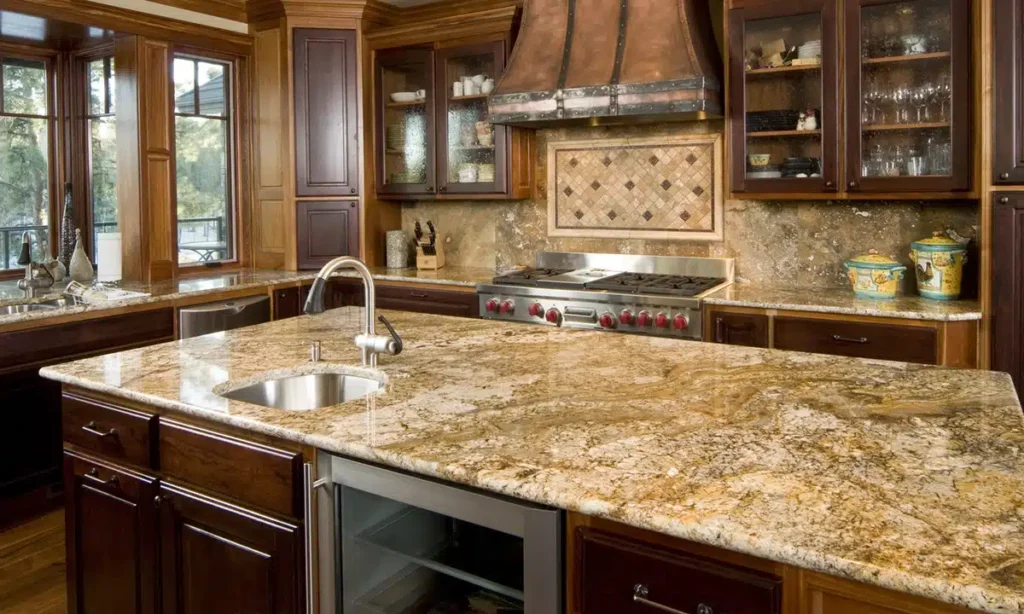
Natural marble and granite are more than just aesthetic elements for modern homes. They are ageless, durable, luxury gemstones that have fascinated people for millennia. Marble and granite have left their imprint on everything from grand ancient buildings to beautiful modern kitchens. However, before these stones enter our homes, they travel a lengthy and intriguing path. This blog delves into transforming immense boulders like natural marble and granite into the refined pieces we explore today.
Marble and Granite, Nature’s Masterpieces
Marble and granite are natural marvels derived from the Earth’s crust. Granite sourcing is an igneous rock generated by magma crystallization, whereas marble is a metamorphic rock made by extreme heat and pressure. Their varied mineral compositions offer them different appearances and properties, making them desirable for various design purposes. Granite has a speckled appearance from minerals such as quartz, feldspar, and mica, whereas marble has a smooth, veined surface in colors such as green, black, or red. Understanding their natural origins helps to explain their longevity and aesthetic appeal.
The Extraction Method: Revealing Nature’s Beauty
Marble and granite are extracted at specialist quarries using advanced equipment to cut big slabs from the soil. Historically, this labor-intensive operation required simple instruments and physical labor, but it now relies on machinery such as wire saws and diamond-tipped blades. Careful preparation is required to minimize waste and remove natural stone in the largest, most usable slabs feasible. Quarry workers must traverse veins and defects to achieve a faultless finished product, which determines the quality and appearance of the marble or granite slab.
Cut and Shape: From Raw Blocks to Slabs
Following the marble extraction process, stone blocks are transported to processing facilities for transformation. They are cut into slabs or tiles by gang saws; the thickness varies according to the intended application. Thicker slabs are used for countertops, and thinner cuts are used for tiles or wall cladding. Trimming, smoothing, and polishing are used to improve the stone, frequently with diamond polishing pads. The purpose is to bring out the natural beauty of the stone by accentuating its hues, veins, and patterns, resulting in a high-gloss shine, matte texture, or leathered finish.
Ensure quality and consistency.
Marble and granite are subjected to rigorous quality control checks from quarry to residence, looking for flaws such as cracks, irregular color patterns, and surface defects. Marble’s inherent veins can generate weak places, whereas granite is harder and more durable but still subject to thorough examinations. Consistency is essential when working with natural stone because no two slabs are alike. Some vendors hire expert artisans to hand-select slabs that complement one another, resulting in a unified final installation.
Customization for Your Home: Personalized Stone
After the stone has been treated and tested, the following step is customization. Whether you choose marble for your bathroom vanity or granite for your kitchen countertops, the stone is usually cut and fashioned to the customer’s specifications.
This stage entails making templates based on the design ideas, which are subsequently used to guide the cutting and manufacture of the stone. Sink cuts, edge profiles, and appliance fittings are all designed to ensure stone blends seamlessly with other design elements. Modern fabrication processes, such as CNC (Computer Numerical Control) equipment, allow for extremely precise cuts, resulting in complex patterns and detailed shapes.
The Final Installation: Adding Natural Stone to Your Space
Marble and granite’s voyage comes to an end with installation. This step is crucial since poor installation might impair the stone’s appearance and longevity. Large slabs must be handled by expert workers to ensure proper and secure installation.
For countertops, the stone must be precisely aligned and fastened to the base. Joints between slabs must also be filled with high-quality glue or epoxy to reduce obvious seams. Once installed, the stone is sealed to prevent stains, dampness, and damage. This sealing step is especially important for marble, which is more porous and prone to staining than granite.
Long-Term Care: Preserving Your Spending.
Maintaining the beauty and endurance of marble or granite surfaces necessitates frequent maintenance. Resealing granite is recommended to prevent discoloration, particularly in high-traffic areas such as kitchens. Granite is low-maintenance and requires only mild soap and water to clean. Marble, being softer and more porous, necessitates a cautious approach, which includes using cleaners specifically made for marble and avoiding acidic things such as lemon juice or vinegar. Regular resealing and mild cleaning will help keep the stone’s immaculate appearance for years.
Sustainability and Natural Stone: An Environmentally Friendly Choice
Natural stone is gaining appeal as a sustainable building material because of its low processing requirements and extended durability. Marble and granite use less energy than synthetic substitutes, making the marble extraction process more environmentally benign. Modern quarrying technology promotes environmentally acceptable approaches. Choosing natural sustainable stone for your house is an investment in design and sustainability, as its timeless appeal and durability make it a lasting and aesthetically beautiful choice for generations.
Conclusion
Marble and granite are transformed from craggy mountains into polished surfaces in dwellings. Understanding this process increases appreciation for their beauty. Whether you choose marble for its exquisite veining or granite for its durability, these natural stones bring nature’s craftsmanship within. By understanding the entire process, homeowners may make more informed decisions about natural sustainable stone selection and care. Marble and granite’s long-lasting elegance mirrors nature’s beauty and strength, elevating them beyond architectural elements.
